SCARP International Research

While UBC SCARP has been inspired by Vancouver's culture of inclusion, diversity, action, and stewardship towards the world we inhabit, we teach, research, and commit to international contexts and globally diverse needs. 

Not only are the fundamental inquiries of planning today (like uneven access to housing and food, divides in health and education, and so much more) felt disproportionately throughout different international contexts, but truly addressing these needs as planners means understanding diverse contexts. 

International research by SCARP faculty

SCARP faculty members have international reputations in planning scholarship, with their research situated in a variety of international contexts, including the
Global South. 

Below is a sample of internationally-concerned research insights by SCARP faculty. 


Woman in red dress and black blazer

About Professor Nora Angeles

Dr. Angeles' continuing research and interests are on community and international development studies and social policy, participatory planning and governance, participatory action research, and the politics of transnational feminist networks, women’s movements and agrarian issues, particularly in the Southeast Asian region. 

Click the tabs above to read about her international works.

(Trans)Nationalism and (State) Feminism: Philippine Women’s Movements Engagements with States, Civil Societies and International Development Agencies, 1892-2022.

This research project maps the ideological, political and action landscapes of progressive women’s organizations in the Philippines since the last decade of the 19th century up to the first two decades of the 21st century as they engage with three critical institutions (states, civil societies, international agencies) as they navigate the uncharted waters and fluid discursive politics of nationalism, grassroots feminism, state feminism, and transnationalism, including the flows of hyper-mobile change agents, migrant labour, international capital and foreign development assistance. 

It charts the trajectories of progressive women’s movements in the Philippines as they confront the increasing challenges posed by other social movements, new technologies and media, and increasingly powerful right-wing political dynasties amid the persistence of nepotism, political rent-seeking, and predatory governance influencing and shaping local and national development policies and planning cultures.

Why We Struggle With Strategic Knowledge in Action: Explaining the Political Economy Behind Predatory Governance and Chaotic Planning

This research project explains why current literature on knowledge-action divide that frustrates planning success needs to adequately capture the structural and systemic challenges behind this persistent divide across scales of governance, particularly in the Global South. 

Knowledge and practice on strategic planning are well-known. Yet, many countries like the Philippines— with histories of colonial educational systems, rent-seeking politics and persistent predatory governance enriching the powerful privileged few and further impoverishing the poor and marginalized majority — still struggle with strategic planning, or turning scientific knowledge and harnessing technical expertise into collective action that show effective results. 

The problem is often, not with planning science and scientific expertise, but with leadership, collaboration, and governance. 

We need to open the “black box” of multi-scalar interests, ideologies, institutions and institutional inertia in order to explain the political economy behind the mutually reinforcing dynamics of chaotic planning and predatory governance in the Global South. 

Using the Philippines as a case study, this research straddles across governance scales to demonstrate and analyze how and why local, district and regional planners struggle with turning good knowledge into concrete action through collaborative learning and partnerships. 

For the 2025-2026 period, Nora is Visiting Faculty at the University of the Philippines Asian Centre. 

She will be collaborating with Philippine-based colleagues on teaching and improving graduate student supervision culture at the University. Alongside feminist researchers, artists and activists based in Metro Manila, this collaboration regards a feminist seminar series on how community based collective action can be informed by multiple forms of knowledge and polyvocal discourses on intersectionality, identity politics and conceptions of social justice across local and national borders.

Woman in black top

About Professor Stephanie Chang

Dr. Chang is particularly interested in issues of urban risk dynamics, disaster recovery and resilience, infrastructure systems, climate change adaptation, and coastal cities. Much of her work aims to bridge the gap between engineering, natural sciences, and social sciences in addressing the complex issues of natural disasters. Her research has ranged from empirical investigation of major urban disasters to computer modeling and analysis of risk reduction strategies.

Click the tabs above to read about her international works.

Legacy in the Landscape: How Urbanization Shapes Disaster Risk

In her recent book, Legacy in the Landscape: How Urbanization Shapes Disaster Risk (Cambridge University Press, 2025), Stephanie Chang explores 6 international case studies to gain insights into how and why disaster losses are increasing in cities around the world. The urban environmental histories of Vienna (Austria) and Calgary (Canada) are examined to shed light on riverine flooding; New Orleans (USA) and New York City (USA) on coastal flooding; and Kobe (Japan) and Christchurch (New Zealand) on earthquake risk. Prof. Chang finds that “not only are ‘natural disasters’ far from being natural and random occurrences, but they are a collateral outcome of how cities grow.”

See more

Supporting Business Preparation for Future Shocks: International Cases to Understand How Recovery Programs Can Facilitate Adaptation (BRIDGE project)

This study investigates the effectiveness of government policies in supporting business recovery from the COVID-19 pandemic. Together with an international research team, Dr. Chang's students and I are conducting coordinated data collection across 14 cities in 9 countries. They seek to understand how businesses were impacted by the pandemic, how government policies influenced their recovery, and how policies can best support businesses' capacity to withstand future crises, including climate-related disasters. This study is a collaboration with researchers in the U.S., Japan, New Zealand, and the Netherlands. 

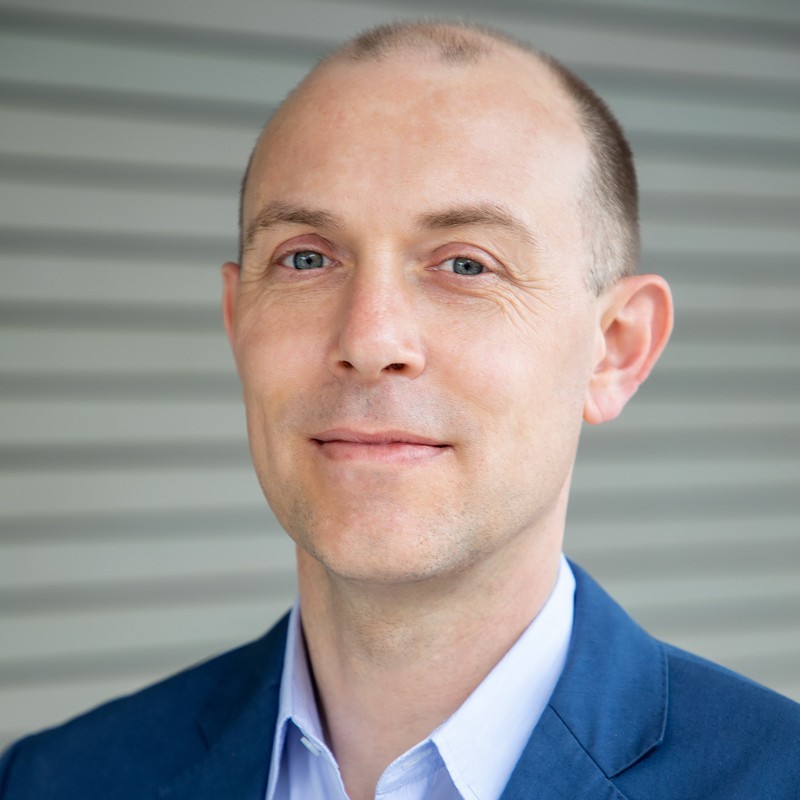
Man in blue blazer

About Associate Professor Mike Hooper

Dr. Hooper has broad geographical interests and is passionate about comparative, empirical research in the rapidly changing cities of the Global South and North. Past research projects have addressed, among other topics, forced displacement in East Africa, post-disaster reconstruction in Haiti, urban densification in Mongolia and the climate-related risks faced by unsheltered residents of North American cities. 

Click the tabs above to read about his international works.

Decent jobs in Accra’s malls? The role of flexibilisation and informalisation in shaping workers’ employment outcomes

This paper investigates employment in Accra’s shopping malls. Drawing on 30 expert interviews and a survey of 409 mall workers, it finds that 31 per cent of new mall jobs were held by previously unemployed workers, constituting a 2 per cent reduction in metropolitan unemployment. Reflecting the role of flexibilisation and informalisation in shaping employment outcomes in Accra’s malls, the paper finds staff remuneration and other employment conditions are poor. The paper concludes by offering several policy recommendations, including that government exercise stronger oversight over the labour market, particularly over minimum wages, which this research shows are often not paid even to those in formal sector.

See more

Pandemics and the City: COVID-19 and the Future of Urban Density and Densification

Chapter 7 of A Multidisciplinary Approach to Pandemics: COVID-19 and Beyond

Cities have long been viewed as sites of risk in pandemics. These concerns, which reach back at least to the medieval period, have been reawakened by the COVID-19 pandemic. 

As in the past, many contemporary writers and policymakers have argued that cities, and particularly those with high density, are dangerous in times of disease outbreak. Such worries have led to countless articles in the news media extolling the dangers of urban life and the perils of density. They have also led to the flight of some residents from cities as, following in the path of urban residents in past pandemics, they have fled to the countryside. 

These trends are particularly pressing for planners and city officials because the COVID-19 pandemic came at a time when there had been notable headway made in advancing arguments for both dense cities and for densification efforts. These pro-density arguments were rooted in evidence that there are environmental, economic, and social benefits that come with density. 

This chapter examines how pandemics, including that associated with COVID-19, intersect in complex ways with urban density. It then evaluates what we can learn from these crises to build more equitable and sustainable cities, where the benefits and costs of density are more fairly shared.

See more

Prefabricating marginality: long-term housing impacts of displacement in post-disaster Montserrat

This paper investigates the long-term housing impacts of displacement and explores how these vary across disaster-affected populations. 

The Caribbean island of Montserrat, an overseas territory of the United Kingdom, provides an excellent setting for examining this relatively understudied topic. Following the eruption of the Soufrière Hills volcano, beginning in 1995, most Montserrat residents were displaced and the island’s south was declared an exclusion zone. 

The paper draws on interviews with 89 randomly selected residents, including displacees and non-displacees, and with 10 Montserratian and United Kingdom officials charged with responding to post-disaster needs. The paper seeks to understand variation in long-term housing conditions with a focus on the impact of housing type. 

The results show that interviewees living in housing built for, rather than by, displacees had significantly lower housing satisfaction scores, with residents of prefabricated houses reporting the lowest scores. Interviewees argued that the top-down provision of these houses was problematic due to limited local input and use of materials poorly suited to local conditions and traditions. 

The paper concludes by situating the findings in the context of the literature on post-disaster housing and by arguing for increased attention to how such housing is provided in terms of both process and materials.

Read more

Disaster Planning Across Scales: Lessons from Post-Earthquake Rubble Management in Oaxaca, Mexico

Co-authored with Dení López

This paper examines rubble management as an important but often neglected component of disaster response and a powerful example of the frequent disconnect between national plans and local action. 

It focuses on five marginalized municipalities in Oaxaca, Mexico: Ciudad Ixtepec, Asuncion Ixtaltepec, El Espinal, Juchitan de Zaragoza, and Santa Maria Xadani. These constitute the region most affected by the Mexican earthquakes of September 2017, with roughly 58% of inhabitants suffering either partial or total loss of their houses. 

The paper builds on the results of fifty-one interviews, a cross-sectional survey with 384 residents, and a mapping analysis to reveal the challenges of post-disaster planning across scales. The results show that local perspectives were given little consideration in nationally-led rubble management plans, and that these documents were likely shaped by concerns over what constituted institutional legitimacy, rather than attention to local context. 

The paper concludes with a discussion of the findings through the lens of institutional isomorphism and offers recommendations for more effective post-disaster rubble management, particularly centered on increasing the involvement and capacity of residents, municipal governments, and other key institutions.

Read more

International research by SCARP students

We are teaching a new generation of Planners, preparing them for a transforming future with new knowledge and the skills to partner with impacted communities.

Our students have produced exceptional new insights reflected in their research, enriched by their diverse contexts and their growth at UBC SCARP. 

Below is a sample of internationally-concerned research insights by SCARP students. 

UBC Crest The official logo of the University of British Columbia. Arrow An arrow indicating direction. Arrow in Circle An arrow indicating direction. Caret An arrowhead indicating direction. E-commerce Cart A shopping cart. Time A clock. Chats Two speech clouds. Facebook The logo for the Facebook social media service. Home A house in silhouette. Information The letter 'i' in a circle. Instagram The logo for the Instagram social media service. Linkedin The logo for the LinkedIn social media service. Location Pin A map location pin. Mail An envelope. Telephone An antique telephone. Play A media play button. Search A magnifying glass. Arrow indicating share action A directional arrow. Speech Bubble A speech bubble. Speaker emmitting sound A speaker emmitting sound. Star An outline of a star. Twitter The logo for the Twitter social media service. Urgent Message An exclamation mark in a speech bubble. User A silhouette of a person. Vimeo The logo for the Vimeo video sharing service. Youtube The logo for the YouTube video sharing service. Future of work A logo for the Future of Work category. Inclusive leadership A logo for the Inclusive leadership category. Planetary health A logo for the Planetary health category. Solutions for people A logo for the Solutions for people category. Thriving cities A logo for the Thriving cities category. University for future A logo for the University for future category.