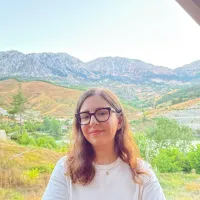
Hayfaa holds a master’s degree in urban planning and policy (2021) from the American University of Beirut, a master's in Architecture (2018) from the Lebanese University, and a bachelor's in Science in Architectural Studies from the Holy Spirit University of Kaslik (2016). Before beginning her PhD, she worked for four years as a research assistant and junior consultant on housing and urban recovery issues in her home country, Lebanon.
Urban recovery amidst overlapping crises
Hayfaa's research interests lie in urban planning and policy, with a particular focus on urban governance, planning actors, disasters and crises, and housing and emergency shelter. She is deeply interested in how different planning actors shape the urban and spatial production of space, particularly in fragile and contested contexts. She's passionate about conducting empirical and comparative case-study research, using qualitative and mixed methods. Previous projects she has worked on have addressed issues related to housing, including housing financialization, urban precarity, housing market actors, suburbanization, as well as post-disaster urban recovery and displacement.
Doctoral Research Title: Disaster Governance in the Age of Polycrisis: A Study of NGO Collaborations in Post-Disaster Response in Lebanon and Türkiye
Hayfaa's doctoral research seeks to understand how nongovernmental organizations (NGOs), increasingly important actors in providing shelter and essential urban services after crises, tackle the challenge of post-disaster collaboration. This task is increasingly required due to the growing complexity of the overlapping crises that are affecting many cities and countries across the globe. The research focuses on Lebanon and Türkiye, which have been struck by unprecedented natural and manmade disasters while also grappling with multiple protracted, overlapping, and interconnected crises – polycrises. Methodologically, this research adopts a comparative case study approach and aims to understand the role of these NGOs in post-disaster response within different institutional contexts with different degrees of state capacity, legal and regulatory structures, and centralization of crisis governance. Given the protracted presence of NGOs in both cases, the research examines their sustained role in shaping urban governance and the urban production of space.
As a Teaching Assistant at UBC, Hayfaa has supported the instruction of the following undergraduate and graduate courses in the School of Community and Regional Planning and the Department of Geography:
- PLAN 211 – City Making: A Global Perspective
- GEOG 371 – Research Strategies in Geography
- PLAN 504 – Urban Design and Visual Representation
- PLAN 231 – Methods of Community Engagement
- GEOG 350 – Urban Worlds
- Public Scholars Initiative (PSI) Award
- Emergency Preparedness Conference Award - University of British Columbia
- Brahm Wiesman Research Travel Award – University of British Columbia
- St John's College Sir Quo-Wei Lee Fellowship, St. John's College - University of British Columbia
- University of British Columbia’s Four-Year Fellowships (4YF) For PhD Students
- University of British Columbia's Four-Year Fellowships (4YF) Tuition Award
- President's Academic Excellence Initiative PhD Award
- University of British Columbia's International Tuition Award
- Urban Planning Thesis Selected among Distinctive Master’s Theses on Urban Issues for Academic Year 2020-2021, American University, Beirut
- Fully funded scholarship for a master’s in urban planning and policy through the Graduate Assistantship and Fellowship